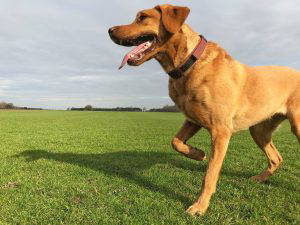
A dog that is panting after a summer walk may simply be cooling down. But heat exhaustion in dogs can develop quickly, and recognising when normal panting has become your dog overheating could prevent a much more serious case of heatstroke.
Early warning signs include unusually heavy or persistent panting, excessive drooling, restlessness, seeking shade or water, slowing down, and becoming reluctant to continue exercising. If your dog is struggling to cool down, stop what they are doing immediately, move them somewhere cooler, and start cooling them with water.
Heatstroke is a veterinary emergency. If you are concerned your dog is overheating, it is safer to act early than to wait for severe symptoms to appear.
The Early Signs That Your Dog Is Getting Too Hot
The most useful thing for owners to know is not one particular symptom, but a change from what is normal for their dog.
Panting is a normal way for dogs to lose heat. After running around on a warm day, some panting is expected. The concern is when the panting becomes unusually intense, does not begin to settle with rest, or appears alongside changes in behaviour.
Watch for early signs such as:
- Heavy or excessive panting
- Excessive drooling
- Restlessness, pacing or agitation
- Constantly looking for shade or water
- Bright or unusually red gums or tongue
- Becoming tired more quickly than expected
- Slowing down or refusing to continue a walk
- Vomiting or diarrhoea
- A faster-than-usual heartbeat
The Royal Veterinary College lists panting, restlessness, drooling, red gums or tongue, an increased heart rate, vomiting and diarrhoea among the early signs of heatstroke in pets.
A dog does not need to collapse before overheating is serious. Stopping during a walk or becoming unwilling to exercise can itself be an important warning sign.
Heat Exhaustion Or Heatstroke: What Is The Difference?
Owners often use the term “heat exhaustion” to describe the earlier stage of overheating before severe heatstroke develops.
Veterinary guidance commonly describes these problems more broadly as heat-related illness, which can range from mild overheating to severe and potentially life-threatening heatstroke.
There is not always a clear point that an owner can identify at home where heat exhaustion suddenly “becomes” heatstroke. That is why it is important to respond to the early symptoms rather than trying to judge exactly how severe the condition has become.
As overheating progresses, you may see much more concerning heat stroke in dogs symptoms, including:
- Weakness
- Confusion or disorientation
- Difficulty breathing
- Poor coordination
- Severe lethargy
- Collapse
- Seizures
These are emergency warning signs.
However, you should not wait for them before taking action. The longer a dog’s body temperature remains dangerously high, the greater the potential for harm.
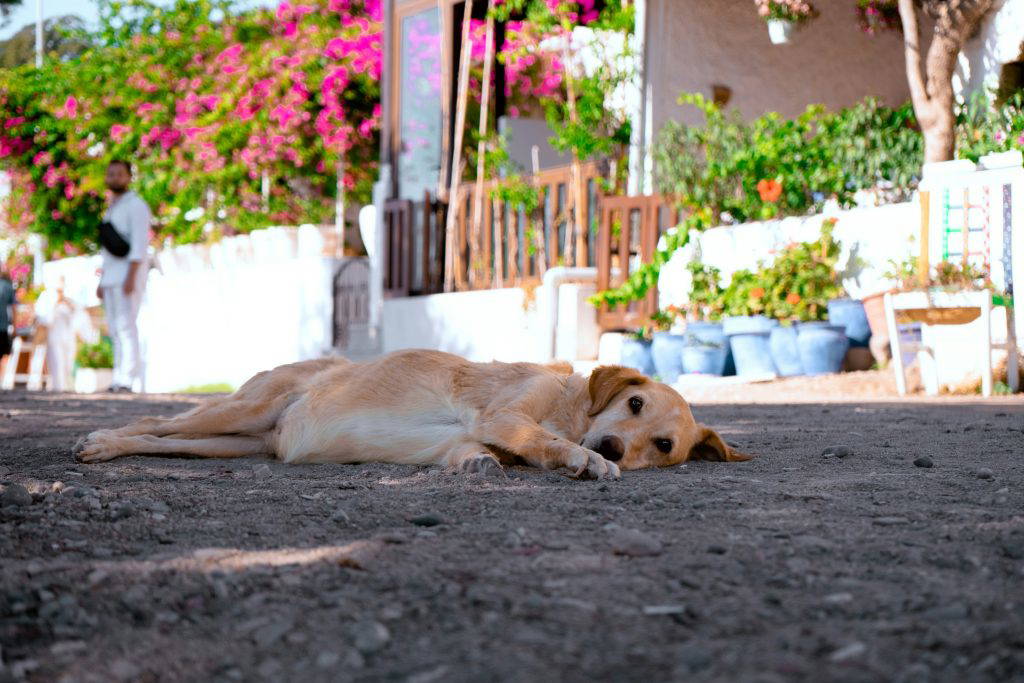
What Should You Do If Your Dog Is Overheating?
If you notice signs of heatstroke in dogs or think your dog is becoming dangerously hot, stop the activity and start cooling them straight away.
Current veterinary guidance can be summed up as: cool first, transport second.
1. Stop Exercise Immediately
Do not encourage your dog to finish the walk or make it back to the car before stopping.
Move them into shade or, preferably, a cooler and well-ventilated environment.
2. Start Cooling Them With Water
Pour water over your dog’s body. The water needs to be cooler than the dog.
Current Royal Veterinary College guidance advises that rapid cooling is important and challenges older advice that dogs must always be cooled slowly with tepid water. For young, healthy and conscious dogs, cold-water immersion can be effective. For older dogs or dogs with underlying health conditions, pouring water over the body while creating air movement is recommended.
If you are using a hose that has been sitting in the sun, allow the hot water trapped inside it to run through first.
3. Create Airflow
A fan, air conditioning or natural breeze can help water evaporate from your dog’s coat and improve cooling.
Do not completely wrap an overheating dog in wet towels. Research highlighted by the Royal Veterinary College found that wet towels were less effective than recommended methods such as water immersion or soaking combined with airflow.
4. Offer Water, But Do Not Force Them To Drink
Allow your dog to take small drinks if they want to.
Do not force water into their mouth, particularly if they are weak, confused or struggling to breathe.
5. Contact A Vet
Start cooling and seek veterinary advice as soon as possible.
Even if your dog appears to improve after cooling, speak to a vet. More serious effects of heatstroke may not always be immediately obvious.
For further evidence-based first-aid guidance, see the Royal Veterinary College’s advice on heatstroke in dogs and cats and PDSA’s first aid for heatstroke.
When Does Panting Become A Warning Sign?
Panting on its own does not automatically mean that a dog has heatstroke.
Think about the circumstances and your dog’s behaviour.
A dog that has been playing may pant heavily for a short period but should gradually settle once exercise stops and they move somewhere cool. More concern is warranted if the panting remains very heavy, your dog cannot settle, their behaviour changes, or other symptoms begin to appear.
A useful rule is to look at your whole dog rather than their breathing alone.
Ask yourself:
- Are they responding to me normally?
- Are they moving normally?
- Do they want to keep walking, or are they stopping?
- Are they excessively drooling?
- Are their gums unusually red?
- Are they desperate for shade or water?
- Is their breathing becoming distressed or noisy?
- Are they becoming confused, weak or unsteady?
If several of these signs appear together after exercise or heat exposure, treat the situation seriously.
Dogs That Can Overheat More Easily
Any dog can develop heat-related illness, but some need particularly careful management in warm weather.
Greater caution is sensible for:
- Flat-faced or brachycephalic breeds
- Older dogs
- Puppies
- Overweight dogs
- Dogs with underlying health problems
- Dogs with thick or heavy coats
- Dogs exercising vigorously
- Dogs that are not accustomed to warm conditions
Flat-faced dogs can find cooling themselves through panting more difficult, while age, excess weight and existing health conditions may also reduce a dog’s ability to cope with heat. PDSA highlighted flat-faced and overweight dogs as groups requiring particular care during warm weather in its May 2026 summer guidance.
Your individual dog’s tolerance matters too. Do not assume that because another dog is happily exercising, yours will be comfortable doing the same.
Heatstroke Does Not Only Happen In Hot Cars
Hot cars are extremely dangerous for dogs, but they are not the only setting in which heatstroke develops.
Exercise is an important risk.
Dogs may continue running, playing or chasing a ball because they are excited, even as their body temperature rises. PDSA advises that dogs can suffer heatstroke during hot-weather exercise and recommends shortening walks, slowing the pace and avoiding walks altogether where conditions are very hot or humid.
Other potentially dangerous situations include:
- Long walks in warm or humid weather
- Vigorous ball games
- Running or cycling with a dog
- Sunny gardens without adequate shade
- Conservatories
- Caravans
- Poorly ventilated rooms
- Outdoor events with limited shade or water
Late summer deserves particular attention. Owners may become less cautious once the peak of summer appears to have passed, but warm, humid days can still make strenuous exercise unsafe.
How To Reduce Your Dog’s Risk On Warm Days
Preventing overheating is far easier than treating it.
Check the weather before planning a long walk and adjust your dog’s routine to the conditions rather than sticking rigidly to their usual exercise schedule.
On warmer days:
- Exercise early in the morning or later in the evening when appropriate
- Keep walks shorter and gentler
- Carry drinking water
- Take regular breaks
- Give your dog access to shade
- Avoid prolonged, vigorous games
- Never leave your dog unattended in a vehicle
- Consider skipping a walk if the weather is particularly hot or humid
Missing one walk will not harm a healthy dog. Exercising them when conditions are unsafe can.
Mental enrichment at home, short training sessions, scent games and food puzzles can provide stimulation when a long outdoor walk is not sensible.
Frequently Asked Questions About Heat Exhaustion In Dogs
Can A Dog Get Heatstroke Without Being In Direct Sunlight?
Yes. Heatstroke can result from exercise as well as exposure to a hot or poorly ventilated environment. Humidity and limited airflow can also make it harder for a dog to lose heat.
Should I Wait To See If My Dog Improves Before Calling A Vet?
No. If you suspect heatstroke, begin cooling your dog and contact a vet as soon as possible. Do not wait for severe symptoms such as collapse or seizures to develop.
Can Dogs Get Heatstroke While Walking?
Yes. Exercise-related heatstroke is an important risk. Watch for excessive panting, slowing down, reluctance to continue, excessive drooling and changes in behaviour, especially in warm or humid conditions.
Should I Use Cold Water On An Overheating Dog?
Current Royal Veterinary College guidance states that water used for cooling should be cooler than the dog. Cold-water immersion can be effective for young, healthy, conscious dogs, while pouring water over the body alongside air movement can be used more widely. Do not delay cooling while trying to find water at a particular temperature.
Can A Dog Seem Better But Still Need A Vet?
Yes. A dog appearing calmer after cooling does not necessarily rule out complications. The Royal Veterinary College advises obtaining veterinary advice even if a pet appears to recover, because more serious effects may not immediately be apparent.
Act Early If Your Dog Is Struggling In The Heat
The most important time to recognise heat exhaustion in dogs is before the dramatic signs of heatstroke in dogs, such as confusion, weakness, collapse or seizures, have developed.
If unusually heavy panting is accompanied by excessive drooling, restlessness, slowing down or a reluctance to continue exercising, stop immediately. Move your dog somewhere cool, start cooling them with water and seek veterinary advice.
If you’re concerned that your dog may be overheating, Vista Vets’ Chelmsford team can advise you on the appropriate next step. In an emergency, the practice advises owners to call rather than use the online booking form. For non-emergency veterinary care, you can book a veterinary appointment with Vista Vets.