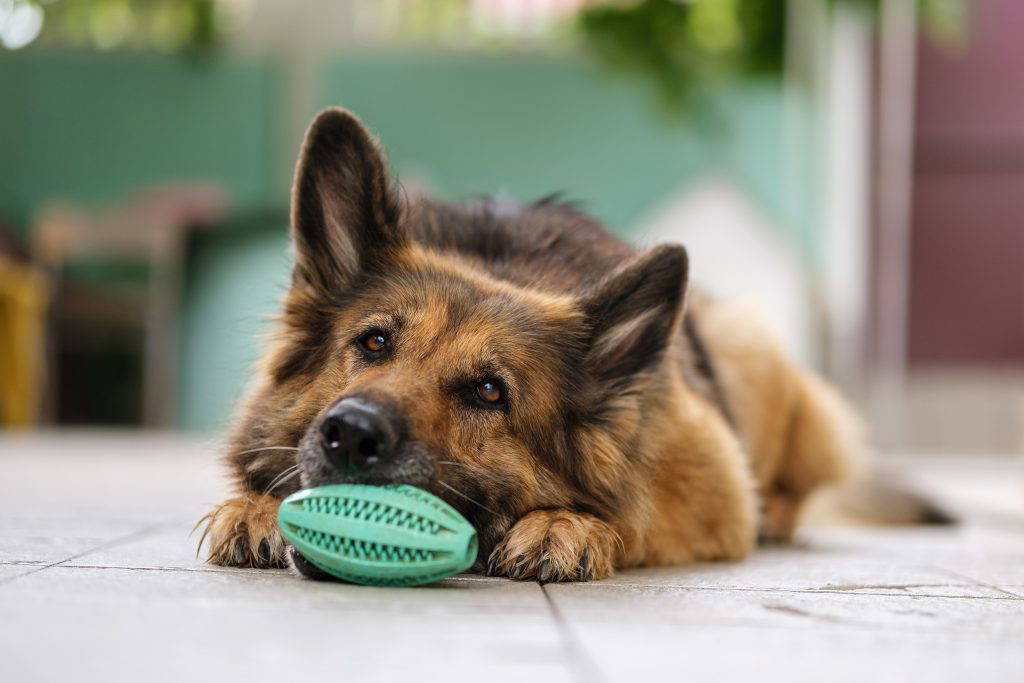
Has your dog started taking longer to get up after a nap, hesitating before jumping into the car or slowing down on their usual walks? These small changes can be early signs of arthritis in dogs.
Arthritis often develops gradually, making it easy to mistake the symptoms for normal ageing. However, a stiff dog is not necessarily just getting older. Changes in movement, behaviour and everyday habits can indicate joint pain that deserves attention.
Recognising dog arthritis symptoms early can help you take steps to protect your dog’s comfort and mobility.
In this guide, we’ll explain what arthritis looks like, how to spot the less obvious warning signs, what a veterinary assessment involves and how to support your dog’s joints at home.
What Are the First Signs of Arthritis in Dogs?
The earliest signs of arthritis in dogs often include stiffness after resting, difficulty getting up, reluctance to jump or climb stairs, slower walks and reduced enthusiasm for exercise.
Some dogs also become less playful, change their sleeping habits or seem uncomfortable when touched around particular joints.
These symptoms may be subtle at first. Your dog might still enjoy walks and appear happy while experiencing joint discomfort.
If you notice persistent changes in how your dog moves or behaves, arrange a veterinary examination. Arthritis cannot be confirmed from symptoms alone, and other conditions can cause similar problems.
What Is Arthritis in Dogs?
Arthritis is a condition that causes inflammation, discomfort and reduced movement in affected joints.
The most common form in dogs is osteoarthritis, also known as degenerative joint disease.
Healthy joints contain smooth cartilage that helps bones move against each other with minimal friction. In osteoarthritis, the cartilage and other structures within the joint gradually deteriorate, leading to pain, inflammation and changes in how the joint functions.
Arthritis can affect several joints, including the hips, knees, elbows and shoulders.
Although it is particularly common in older dogs, younger animals can also develop arthritis, especially if they have underlying joint conditions or have previously suffered an injury.
Arthritis is generally a long-term condition, but appropriate management can help many dogs remain comfortable and active.
Seven Common Dog Arthritis Symptoms to Watch For
Dogs are often good at adapting to discomfort. Rather than crying or visibly showing pain, they may quietly change how they move or behave.
These are seven signs worth paying attention to.
01
Stiffness After Sleeping or Resting
One of the most recognisable symptoms of arthritis is stiffness when your dog first gets up.
You might notice that your dog:
- Takes longer to stand after sleeping
- Walks with short, cautious steps initially
- Appears stiff after lying down for an extended period
- Moves more freely after a few minutes of gentle activity
This pattern is sometimes described as stiffness that improves once the dog gets moving.
However, improvement during a walk does not mean the underlying problem has disappeared.
02
Difficulty Getting Up or Lying Down
A dog with painful joints may struggle with movements that previously seemed effortless.
For example, they may need several attempts to stand up, lower themselves slowly onto their bed or avoid lying on hard floors.
Some dogs shift their weight onto their front legs when standing to reduce pressure on painful hips or hind limbs.
Watch for changes in the way your dog moves between sitting, standing and lying down.
03
Reluctance to Jump or Climb Stairs
Jumping into a car, climbing onto the sofa or using stairs places additional demands on a dog's joints.
If your dog suddenly starts hesitating before these activities, joint discomfort could be contributing.
You may notice them waiting to be lifted, choosing a different route through the house or refusing activities they previously enjoyed.
This can be particularly noticeable in dogs with hip, knee or spinal discomfort.
04
Limping or Changes in Walking Style
Arthritis can affect how a dog distributes their weight when walking.
Possible changes include:
- Limping, particularly after rest or exercise
- Taking shorter strides
- Walking more slowly
- Appearing uneven or unsteady
- Shifting weight away from one leg
- Moving both hind legs together when running
Limping is not always caused by arthritis. Injuries, ligament problems, paw conditions and other illnesses can produce similar symptoms.
A persistent limp should always be assessed rather than assumed to be age-related.
05
Reduced Interest in Walks and Play
Dogs with arthritis may become less enthusiastic about physical activities.
Your dog might still become excited when you pick up their lead but tire more quickly once outside.
Other changes include stopping frequently, lagging behind, avoiding energetic games or choosing shorter walks.
A reduction in activity can also lead to muscle loss, which may further affect joint stability and mobility.
06
Changes in Mood or Behaviour
Pain can affect behaviour as well as movement.
Some dogs become quieter, less sociable or unusually irritable. Others may avoid being touched, particularly around painful areas.
You might notice your dog:
- Moving away when you try to stroke them
- Becoming restless at night
- Struggling to find a comfortable sleeping position
- Showing less interest in family activities
- Reacting defensively when handled
These changes do not necessarily mean your dog's personality has changed. They may be signs that everyday activities have become uncomfortable.
07
Muscle Loss or Changes in Posture
When a dog avoids using a painful limb, the muscles supporting that area can gradually weaken.
You may notice that one leg looks thinner than the other or that your dog's hindquarters appear less muscular.
Some dogs also stand differently, shift their weight forwards or adopt an unusual posture to reduce discomfort.
Muscle loss can develop slowly, so comparing your dog's appearance and movement over time can be useful.
How to Tell the Difference Between Normal Ageing and Arthritis
As dogs get older, they may naturally become less energetic or need more rest.
However, slowing down should not automatically be dismissed as a normal part of ageing.
The important distinction is whether your dog is choosing to rest more or finding ordinary movements increasingly difficult.
These differences are not a diagnostic test. Ageing and arthritis can occur together, and other health conditions may cause similar changes.
If your older dog appears uncomfortable, a veterinary assessment can help determine what is happening.
Can Younger Dogs Develop Arthritis?
Yes. Although arthritis is often associated with senior dogs, it can develop in younger animals.
Some dogs have joint abnormalities that increase their risk of osteoarthritis later in life.
Examples include hip dysplasia, elbow dysplasia and certain developmental joint conditions.
Previous injuries, including ligament damage or joint fractures, can also contribute to degenerative changes.
Other factors that may increase the likelihood of arthritis include:
- Excess body weight
- Repeated joint strain
- Joint instability
- Certain inherited orthopaedic conditions
- Previous surgery or injury affecting a joint
Large breeds are often associated with particular joint conditions, but arthritis can affect dogs of any breed or size.
If a young dog repeatedly limps, becomes stiff or struggles with exercise, it is important to investigate rather than assuming they are simply growing.
How to Check Your Dog’s Mobility at Home
You cannot diagnose arthritis at home, but you can gather useful information about changes in your dog’s movement.
Try observing your dog during familiar activities over several days.
Watch How They Get Up After Resting
Observe your dog after a normal nap.
Do they stand easily, or do they hesitate, stretch repeatedly or struggle to get their legs underneath them?
Notice whether their first few steps look different from their movement later in the day.
Observe Their Normal Walking Pattern
Watch your dog walking at a comfortable pace on a flat, non-slip surface.
Look for limping, shortened strides, uneven movement or reluctance to put weight on a particular leg.
Do not force your dog to run, jump or climb stairs to test their mobility.
Record Changes in Everyday Activities
Keep a brief note of activities your dog finds difficult.
For example:
This information can help your vet identify patterns that may not be obvious during a short consultation.
Take Short Videos of Their Movement
A short video of your dog walking, standing up or navigating a familiar area can be particularly helpful.
Some dogs move differently at the veterinary practice because of excitement or unfamiliar surroundings.
Videos taken at home can provide additional insight into how your dog manages everyday activities.
Avoid manipulating painful joints or attempting to assess their range of movement yourself.
How Do Vets Diagnose Arthritis in Dogs?
Diagnosing arthritis involves assessing your dog’s symptoms, medical history and physical condition.
During an appointment, your vet may ask when the stiffness or limping started, whether it changes throughout the day and how your dog’s activity levels have been affected.
A physical examination can help identify:
- Pain or discomfort around particular joints
- Reduced joint movement
- Joint swelling or thickening
- Muscle loss
- Changes in posture or walking pattern
Your vet may also recommend X-rays to investigate joint changes or rule out other causes of discomfort.
However, X-ray findings do not always reflect how much pain a dog experiences. Some dogs have noticeable changes on imaging but relatively mild symptoms, while others experience considerable discomfort with less obvious changes.
This is why a diagnosis should consider the whole dog rather than imaging results alone.
At Vista Vets, our veterinary team can assess mobility concerns and discuss whether further investigations, including diagnostic imaging or an orthopaedic assessment, would be appropriate.
Can Arthritis in Dogs Be Treated?
Although osteoarthritis cannot usually be reversed, there are several ways to manage discomfort and support mobility.
Treatment is generally most effective when it combines appropriate veterinary care with practical changes at home.
Veterinary Pain Management
Your vet may recommend medication to help manage pain and inflammation.
The most appropriate treatment depends on your dog's age, overall health, other medications and the severity of their symptoms.
Some dogs benefit from anti-inflammatory medication, while others may need different or additional approaches.
Never give your dog human painkillers such as ibuprofen or paracetamol unless specifically instructed by a vet. These medicines can be dangerous for dogs.
Maintaining a Healthy Weight
Excess weight places additional strain on painful joints.
If your dog is overweight, a gradual, veterinary-guided weight management plan can be an important part of arthritis care.
Weight management may help improve comfort and mobility, particularly when combined with appropriate exercise and pain relief.
Gentle, Consistent Exercise
Dogs with arthritis still benefit from suitable physical activity.
Regular, controlled exercise can help maintain muscle strength, support joint function and reduce the effects of inactivity.
Shorter, more frequent walks may be more manageable than occasional long outings.
The right amount of exercise depends on your dog's condition and response to activity.
If your dog becomes noticeably more stiff or sore afterwards, their exercise plan may need adjusting.
Physiotherapy and Rehabilitation
Veterinary physiotherapy and other rehabilitation approaches may help some dogs maintain strength, balance and movement.
These should be guided by appropriately qualified professionals and tailored to your dog's diagnosis.
For dogs with underlying joint instability or other orthopaedic conditions, your vet may also discuss whether specialist treatment or surgery is relevant.
Not every dog with arthritis requires surgery.

Simple Home Changes That Can Help a Stiff Dog
Small adjustments around the house can make daily life easier for a dog experiencing joint discomfort.
Provide Supportive Bedding
Choose a comfortable, supportive bed that is easy for your dog to get in and out of. Position it away from cold draughts and slippery flooring.
Improve Grip on Floors
Laminate, tiles and polished wooden floors can be difficult for dogs with reduced mobility. Non-slip rugs or runners can provide more secure footing.
Use Ramps Where Appropriate
A stable, non-slip ramp can reduce the need to jump into cars or onto raised surfaces. Introduce it gradually and supervise its use.
Make Food and Water Easy to Reach
Keep bowls in accessible locations so your dog does not need to navigate stairs or slippery areas unnecessarily.
Adjust Grooming and Handling
Be gentle when drying, grooming or lifting your dog. If they appear uncomfortable, stop and ask your vet for advice on safer handling.
Keep Their Routine Predictable
Regular exercise, rest and mealtimes can make it easier to recognise changes in comfort and activity.
These adjustments do not replace treatment, but they can support your dog's wellbeing alongside veterinary care.
When Should You Take Your Dog to the Vet for Stiffness or Limping?
If your dog is regularly stiff after resting, has started limping or seems reluctant to exercise, arrange a veterinary appointment rather than waiting for the symptoms to become severe.
Early assessment can help identify arthritis or another underlying problem and allow an appropriate management plan to begin.
Seek urgent veterinary attention if your dog:
- Suddenly cannot stand or walk
- Is unable to put weight on a leg
- Shows severe pain or distress
- Develops sudden, significant joint swelling
- Has difficulty moving after an injury
- Experiences weakness or paralysis
These symptoms may indicate an injury or another condition that requires prompt treatment.
For dogs with diagnosed arthritis, regular reviews are also important. Pain levels and mobility can change over time, meaning treatment may need adjusting.
Frequently Asked Questions
How Do I Know if My Dog Has Arthritis or Is Just Getting Old?
Look for signs of discomfort rather than simply reduced energy. Stiffness after rest, limping, difficulty standing, reluctance to jump and changes in behaviour may indicate arthritis. A veterinary examination is needed to determine whether joint disease or another condition is responsible.
What Age Do Dogs Usually Develop Arthritis?
Arthritis becomes more common as dogs age, but there is no single age when it begins. Younger dogs can develop osteoarthritis following joint injuries or because of conditions such as hip or elbow dysplasia.
Can a Dog Have Arthritis Without Limping?
Yes. Some dogs with arthritis never develop an obvious limp, particularly when several joints are affected. They may instead walk more slowly, avoid stairs, struggle to stand or become less interested in exercise.
Does Cold Weather Make Dog Arthritis Worse?
Some dogs appear stiffer or less comfortable during cold or damp weather. Providing warm bedding, maintaining regular gentle activity and avoiding prolonged exposure to uncomfortable conditions may help. Persistent or worsening symptoms should still be assessed by a vet.
Should I Still Walk My Dog if They Have Arthritis?
In most cases, yes. Appropriate, controlled exercise helps maintain muscle strength and mobility. Short, regular walks are often preferable to strenuous activities or long, occasional walks. Your vet can advise on a suitable exercise routine based on your dog’s condition.
Can Dogs Live Comfortably With Arthritis?
Many dogs can continue enjoying a good quality of life with appropriate pain management, weight control, suitable exercise and adjustments at home. Arthritis is a progressive condition, so ongoing monitoring and veterinary support are important.
Help Your Dog Stay Comfortable and Mobile
The early signs of arthritis are not always dramatic. Sometimes the first clue is a dog who pauses before climbing the stairs, takes longer to get out of bed or no longer looks forward to their usual walk.
Noticing these changes matters because pain and reduced mobility should not simply be accepted as an unavoidable part of getting older.
If your dog is showing signs of stiffness or discomfort, start by recording what you notice and arranging a veterinary assessment. A combination of early diagnosis, appropriate treatment and practical home adjustments can help support their comfort and independence.
For additional guidance, the PDSA has a useful resource on arthritis in dogs, including symptoms, treatment options and everyday care.
At Vista Vets, we help dog owners in Chelmsford understand changes in their pets’ mobility and explore suitable ways to manage joint discomfort. Whether your dog is showing early signs of stiffness or has an existing arthritis diagnosis, our team can help assess their needs.
If you’re concerned about your dog’s movement or comfort, contact Vista Vets to arrange a veterinary appointment and discuss the next steps.